Emerging Leaders

For Restoring Balance Fellowship

Nurturing the Next Generation of Indigenous Leaders

Across the Restoring Balance Collaborative, our Indigenous practitioners, community members, and thought partners have shared a consistent message: emerging Indigenous leaders carry the vision, responsibility, and courage needed to steward the future. They deserve meaningful support as they step into these roles.

In response to this call, the Restoring Balance Collaborative is piloting the Emerging Leaders for Restoring Balance (EL4RB) Fellowship, a 12-month program designed to uplift and support young Indigenous leaders ages 21–35.

The fellowship is part of our broader commitment to nurturing the next generation of Indigenous leaders and strengthening intergenerational leadership pathways. Through mentorship, shared learning, and hands-on experience, we hope to create a supportive global learning space wheree merging leaders can deepen their leadership practice, build meaningful relationships, and advance Indigenous-led solutions in their communities.

“Together we create a joyful, positive space where we feel cared for and seen.” - Emerging Leaders

Why Invest in Emerging Leaders?

Within the Collaborative, there is a deep desire to ensurethat ancestral knowledge, wisdom, and ways of being are carried forward tofuture generations.

We recognize that Indigenous leadership is deeply rooted inculture, identity, community, and relationships with the land. Elders andexperienced leaders hold invaluable knowledge about caring for the land,strengthening communities, and navigating complex systems. Creatingopportunities for this knowledge to be shared across generations is essentialto nurturing leaders who are grounded in their values and prepared to meet thechallenges of today and tomorrow.

We also recognize that traditional pathways for mentorshipand passing on knowledge have been disrupted by colonization. Intentionalleadership development is especially important for young Indigenous leaders whooften navigate both Indigenous and Western systems.

Through this fellowship, we hope to create space foremerging leaders to learn from one another, connect with experienced Indigenousleaders, and strengthen their leadership through storytelling, culturallearning, community service, and hands-on stewardship projects.

Investing in emerging leaders is an investment in the futureof our communities. It is one way we can uplift Indigenous agency, strengthenconnections across generations, and support meaningful change that ripplesoutward through our relationships, communities, and institutions.

Naya (Emerging Leader) is a prolific farmer and advocate for her community in the realm of the mining and radioactive issues that are going in and around Acoma. If she’s in earshot, she’s there for you. Great problem solver, decision-maker. A leader in the community, Pueblos, and Southwestern Territories.
– Autumn Gomez (RBC Core Member, Mentor)
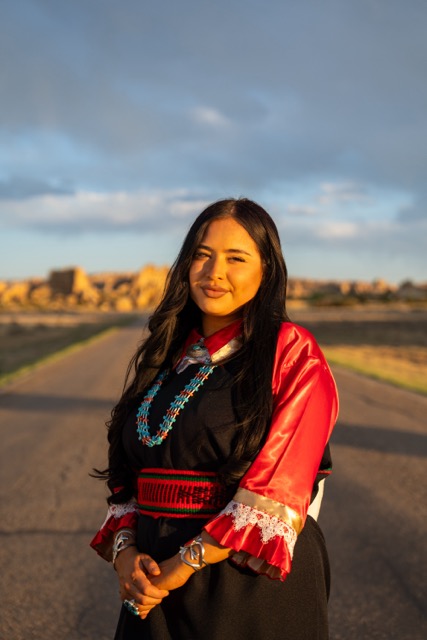
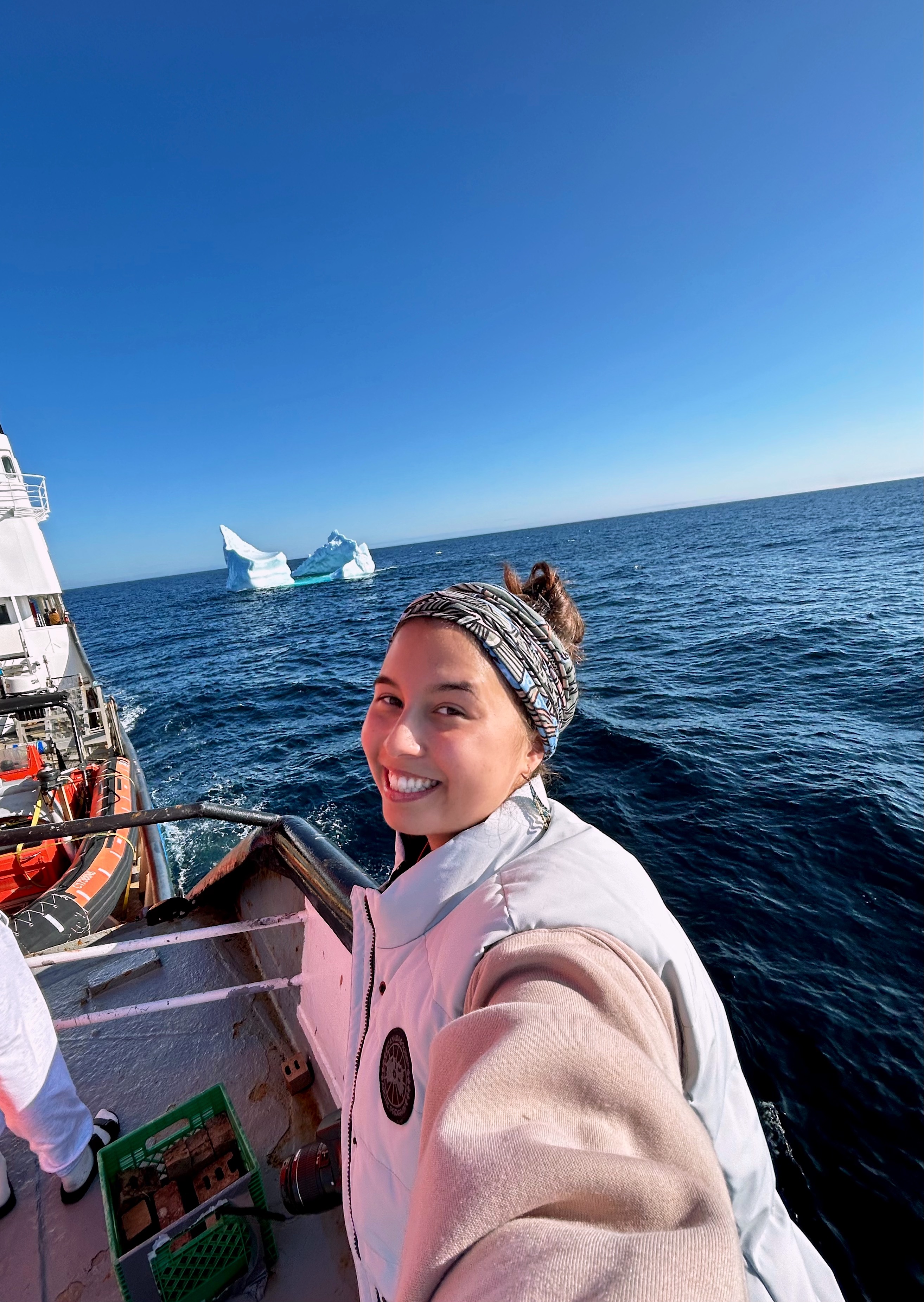
“To me, being a part of the Emerging Leaders Fellowship means being a part of a space, learning from other leaders and fellows, building that relationship with each other and sharing our connections, but also sharing the work that we’re doing, bring in the communities and stories of our people and having that knowledge exchange -- having a space to learn from each other and support each other in our work.”
-
Amber Souza (2026-27 Emerging Leader)

About the Fellowship

The EL4RB Fellowship brings together emerging Indigenous leaders from across the Collaborative who are putting Indigenous stewardship practices into action in their communities.

Core Steward organizations are invited to nominate and sponsor an emerging leader from their community who is leading a community-based stewardship project.

Selected fellows will receive a small grant, mentorship, and opportunities for shared learning and relationship building with Indigenous leaders and peers from around the world.

Through this experience, fellows will have opportunities to:

  • Strengthen their leadership practice while staying grounded in their culture, identity, and community.
  • Learn from Indigenous elders, mentors, and peers through intergenerational knowledge sharing and relationship building.
  • Advance community-based stewardship projects that reflect local priorities, knowledge, and Indigenous ways of caring for the land and water.
  • Build global connections with other emerging leaders who share a commitment to Indigenous-led solutions.
  • Share their stories, experiences, and lessons learned to inspire and support others across the Collaborative.

Growing Together, Looking Ahead

The EL4RB Fellowship is a first step in building a lasting pathway for emerging Indigenous leaders within the Restoring Balance Collaborative.

As we learn alongside our first group of fellows, their experiences, reflections, and insights will help shape the future of the program and how we continue to support Indigenous leadership across generations.

We hope the relationships, knowledge, and experiences gained through the fellowship will extend well beyond the 12-month program, creating ripples of change that strengthen our communities and carry Indigenous stewardship practices forward for generations to come.

For more information about the EL4RB Fellowship, please contact Theresa Cariño, our Community Builder + Education Lead at: Theresa.c@restorebalance.world

Meet the 2026-27 Emerging Leaders

Naya Marie Anllo-Valdo

Acoma Pueblo

Naya Marie Anllo-Valdo is a farmer, advocate, educator, doula, and artist from Acoma Pueblo. She is a recent graduate of the University of New Mexico Native American Studies Masters program and an alumni of New York University. Naya currently works with Pueblo Action Alliance and Three Sisters Collective, as well as volunteers on farms in her home community and throughout Pueblo Country. She also provides guidance and support to organizations and grassroots groups throughout northern and central New Mexico. Lately, she has been visiting Indigenous run farming projects from New York to Honduras to Aotearoa and beyond as part of her journey to preserve ancestral farming and foodways and make connections to the global Indigenous struggle. Naya has served as a youth mentor and continues to lead youth today by helping to establish Youth and Women’s groups in her community. She is active in intergenerational spaces both in her craft work and in her environmental advocacy. She has a deep understanding of the importance of Indigenous futurisms and balancing the hard work that comes with the lifestyle of a traditional Pueblo person.

Kianna Bear-Hetherington

Wolastoqey

Kianna Bear-Hetherington is a proud Wolastoqey woman from Sitansisk (St. Mary’s First Nation) in Fredericton, New Brunswick. She holds a Bachelor of Science in Environmental Management with a specialization in Water Resource Management and is currently pursuing a Master of Marine Management at Dalhousie University. Kianna works as the Water Protector (Samaqan Nutankeyutok) with the Wolastoqey Nation in New Brunswick, where she leads Wolastoqey-led conservation initiatives, including protected areas and marine planning efforts. Her work focuses on advancing Wolastoqey priorities and supporting the long-term care and stewardship of their ancestral lands and waters. She is deeply committed to empowering Indigenous youth and supporting the next generation of land and water protectors through mentorship, community engagement, and land-based learning.

Abraham Francis

Aronia Collective Founder, Clarkson University PhD Candidate

Mohawk

Teharonhiathe ionkiats (My name is the colour of the sky at dawn), kanienkeha:ka niwakonhwentsio:ten (I am Mohawk), wakeneniothro:non (I am Deer Clan), ta:non Akwesasne kena:kere (and I live in Akwesasne). My english name is Abraham Francis. I have spent my life loving and committed to caring for all of my relations. My love for the water began at the edge of the Kaniatarowanenneh (St. Lawrence River) as a young kid and has carried me to a place in my life where so much of my work revolves around this river. I am grateful to all the love and care that I have received from my community, and I work diligently to give back. They instilled in me the desire to help protect creation for tahatikonhsetonkie (the coming faces), which has and will continue to shape my education and career. I believe in the power of my people's knowledge to care for the land and the ability to call home all the knowledge stolen from us, which can improve the health of our community and all of creation.

Amber Souza, MSW

Kaliʻuokapaʻakai Collective and Huliauapaʻa Program Coordinator

Native Hawaiian/Kānaka ʻŌiwi

Amber Souza is from Honomakaʻu, Kohala, and currently resides in Kaumana, Hilo, Hawaiʻi Island. She graduated from the University of Hawaiʻi at Mānoa in 2017 with a B.A in Hawaiian Studies with a concentration in Mālama ʻAina (Hawaiian Perspectives on Resource Management) and in 2019 with a Master’s in Social Work. In 2019, she was an intern in Huliauapaʻa’s Wahi Kūpuna Internship Program, where her research focused on inventorying historical changes in the Waipā kahawai (stream) to help inform current stewardship practices. This internship experience paved the way for her current position in Huliauapaʻa as a Kaliʻuokapaʻakai Collective and Programs Coordinator. Her roles include facilitating remote and land-based programming for the Kaliʻuokapaʻakai Collective, the Wahi Kūpuna Internship Program, and other community-based initiatives, as well as grant writing, social media, and website communications. Amber’s work is driven by her aloha for her community and ʻāina, and the need to ensure Hawaiʻi’s natural and cultural resources are protected for generations to come.

Qöyawaysi Serenity Joshevama

Hopi

Qöyawaysi Serenity Joshevama (Hopi) is a rising senior at Prescott College to receive a BA in Psychology with an emphasis on becoming a clinician for Queer and Two Spirit communities. As an urban Indian who grew up in Los Angeles, California and lived in Seattle, Washington as well as Tucson, Arizona, they stay connected to their Hopi roots to make sense of the world. Since 2022, Qöyawaysi has been a part of the Ecotruths for Indigenous Youth, an intertribal youth program focused on reconnecting Indigenous people with nonhuman and environmental relations. Upon recommendation by the program elders they became a mentor in 2023. Previously, Qoyawaysi worked as an apprentice to the Plant Cruzer specifically with a Kickapoo/Nahua elder learning traditional Sonoran desert plant knowledge, including how to create salves, sprays and teas. They have been volunteering with Conservation CATalyst for the past ten years, a nonprofit focused on conservation of the four wild cats of Arizona which are the jaguar, ocelot, bobcat and mountain lion.  We have presented at various events, conferences and schools to inform about the importance of big cats, their current existence in Arizona while giving reasons for why people should care about protecting them. Qöyawaysi is dedicated to showing and spreading respect for the nonhuman relations between the land, waters, plants, and animals.